
The Silent Language: Understanding the Depth of the Japanese Bow (Ojigi[お辞儀])
In Japan, a bow is more than just a greeting—it's a reflection of social harmony and respect. Learn the subtle nuances of "Ojigi" and how it communicates what words cannot.
If you spend even a single day in Japan, you will witness the Ojigi countless times. From the subtle nod of a shopkeeper to the deep bow of a CEO, this silent gesture speaks volumes about Japanese society.
More Than a Greeting
In many Western cultures, a handshake is the standard for building trust. In Japan, the bow serves a similar purpose but adds a layer of "personal space" and "mutual respect." By bowing, you acknowledge the other person's presence and status without physical contact, maintaining a harmonious distance known as Ma.
The Three Degrees of Respect
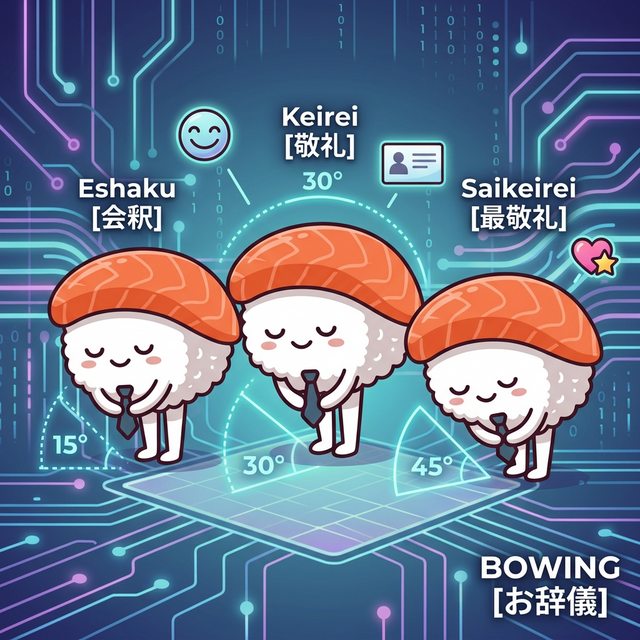
Did you know that the angle of your bow changes its meaning?
- Eshaku (15°): A casual greeting for colleagues or people you pass in the hallway.
- Keirei (30°): The standard business bow, used when meeting clients or entering a meeting.
- Saikeirei (45°): The deepest form of respect, reserved for sincere apologies or expressing profound gratitude to someone of very high status.
The Heart Behind the Gesture
The most important part of the bow isn't the angle of your waist, but the timing. A proper bow is performed with a pause at the lowest point, showing that you are giving the other person your time and attention. It is an act of "lowering oneself" to elevate the other—a core tenet of Japanese humility.
Next time you meet someone, try a slight nod of the head. You’ll find that even a small "Ojigi" can bridge cultural gaps faster than words ever could.
Master the nuance implicitly.
Join 2,500+ professionals receiving weekly AI-decoded breakdowns of Japanese business etiquette.