
Deciphering "Kento Shimasu[検討します]": The Art of the Gentle Japanese "No"
Is it a "Yes" or a "No"? Decipher the cultural nuance behind the common Japanese business phrase "Kento Shimasu" and how it maintains social harmony.
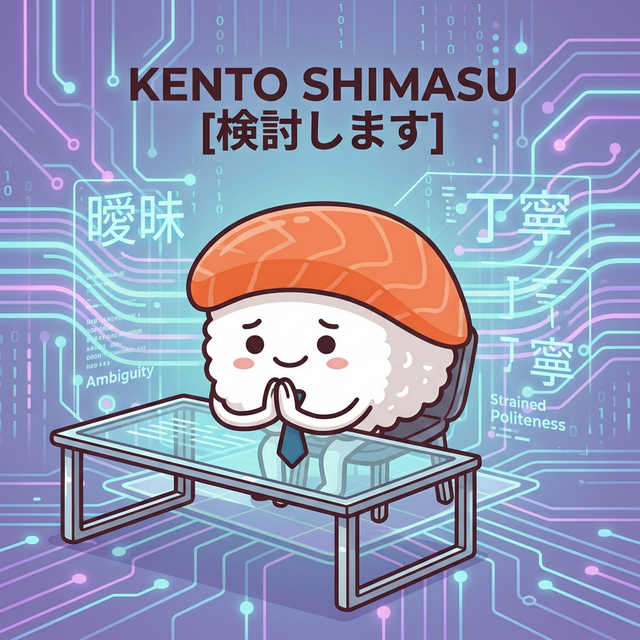
In a Japanese business meeting, you might present a proposal and receive the response: Kento shimasu.
The Cultural Buffer
To a Western ear, "I will consider it" sounds like there is still a chance for a "Yes." However, in the context of Japanese business etiquette, it often serves as a "soft No." Japan is a high-context culture where direct refusal is seen as abrasive and harmful to Wa (harmony).
Why Not Just Say No?
Maintaining a positive relationship is often prioritized over immediate clarity. By saying they will "consider" it, the speaker allows everyone to leave the meeting without losing face. It provides a buffer period, allowing the final rejection to be delivered more gently later, or for the idea to simply fade away.
How to Read Between the Lines
How can you tell if it’s a genuine "consideration" or a polite "No"?
- The Silence: If followed by a long pause or a slight tilt of the head, it’s likely a rejection.
- The Follow-up: If you hear nothing for weeks despite a follow-up, the answer was "Kento shimasu" in its final form.
Understanding this phrase is a vital step in mastering Japanese communication—it’s not about the words, but the harmony they protect.
Master the nuance implicitly.
Join 2,500+ professionals receiving weekly AI-decoded breakdowns of Japanese business etiquette.